
Knee Pain Physiotherapy in Hervey Bay
Expert knee rehab at The Physio Don to get you back to walking, running, and living pain-free.
Whether it's a sudden injury, an arthritic knee that flares on long walks, or pain that's been quietly limiting what you do for months — we'll work out what's going on and build a plan to get you moving again.
Common Knee Conditions We Help With
Knees are heavily loaded joints that sit between the hip and the foot, so they tend to cop the consequences when something further up or down the chain isn't pulling its weight. The result is that knee pain shows up in lots of different ways, at lots of different ages, for lots of different reasons. Most of what we see falls into a handful of common buckets:
- Osteoarthritis. One of the most common causes of knee pain in adults over 40. Manageable, often improves with the right loading.
- Meniscus injuries. From traumatic tears in younger athletes to degenerative changes that show up on scans in people who have no pain at all.
- Patellofemoral pain. Pain around or behind the kneecap — usually worse on stairs, hills, squatting or after long periods of sitting.
- Tendon pain (patellar & quadriceps). Common in runners, jumpers and people who have ramped up training quickly. Responds well to structured loading.
- Ligament injuries (MCL, LCL, ACL, PCL). From minor sprains through to full ruptures — managed conservatively or alongside a surgical pathway.
- Runner's knee. An umbrella term for several running-related knee complaints. Almost always a load and capacity problem rather than a structural one.
- ACL injuries & recovery. Pre-hab before surgery and structured post-op rehab — including return-to-sport testing for those getting back to cutting and pivoting.
- Post-surgical rehabilitation. Knee replacements, arthroscopies, ligament reconstructions and meniscal repairs — guided rehab to rebuild strength, range and confidence.
Two people with the same diagnosis often need very different plans — a 35-year-old runner with patellofemoral pain and a 70-year-old with patellofemoral arthritis both have "knee pain at the front", but what they need next is rarely the same.
Who This Is For
Whether you are a runner training for the Hervey Bay 100, a local gardener in Urraween struggling to kneel, or recovering from a knee replacement at St Stephen's Hospital — we can help.
Common Symptoms
Knee problems rarely announce themselves with a single dramatic symptom. Most people come in with a combination of these:
- Pain going up or down stairs
- Pain squatting or getting out of low chairs
- Pain walking — particularly longer distances or on hills
- Pain kneeling, in the garden, on the floor with kids or grandkids
- Pain running, or pain a few hours after a run
- Swelling that comes and goes — particularly after activity
- Clicking and clunking, with or without pain
- Locking — the knee catching and getting stuck mid-movement
- Giving way — a sudden sense the knee won't hold you up
The pattern of symptoms tells us more than any single one of them does. A knee that swells after walking is telling us a different story to one that locks under load or gives way going down a step — and the assessment is built around teasing that apart.
Do I Need A Scan?
One of the most common questions we get: "Should I get an MRI first?" Usually, no. Scans are an excellent tool for confirming a specific structural injury, but they're a poor tool for diagnosing pain. The reason is simple: scan findings and pain don't reliably line up.
Studies of people in their 50s and 60s with no knee pain at all consistently show high rates of meniscal changes and signs of osteoarthritis on MRI. These findings are part of normal ageing, like grey hair and skin wrinkles, and most of the time they don't cause symptoms. The flipside is also true — people can have significant knee pain with relatively unremarkable scans.
A scan is genuinely useful when the result would change the plan: a locked knee that won't straighten, a suspected full ligament rupture in someone wanting to return to pivoting sport, or red-flag symptoms after a significant injury. For the vast majority of knee pain — the achy, niggly, flares-on-stairs kind — a careful clinical assessment will tell us more than any image, and starting with rehab is almost always the right first move.
Why Do Some Knees Keep Flaring Up?
Recurring knee pain rarely means there's something seriously wrong with the joint. More often, it's the predictable result of a cycle that's easy to slip into when something hurts:
- The knee gets sore, so you start doing less.
- Doing less leads to weakness in the quadriceps, glutes and calves.
- A weaker leg knocks your confidence in what the knee can handle.
- You start avoiding activities you used to do without thinking — stairs, squatting, walks, sport.
- The knee becomes less tolerant of normal life, so flares happen more easily.
The frustrating part of this cycle is that it doesn't feel like deconditioning while you're in it — it feels like the knee is the problem. But the way out is almost always the same: gently rebuild what's been lost, restore capacity, and let the knee re-learn that load is safe. Once that happens, flares tend to become less frequent, less severe, and easier to settle when they do show up.
Our Approach
We use a knee-specific framework on every knee that walks through the door, because knees are not backs or shoulders. They have their own load patterns, movement demands, and recovery timelines, and rehab needs to reflect that.
- Understand the knee problem. We take a detailed history and run a targeted assessment to work out what's actually driving your pain — whether it's joint, tendon, cartilage, load, mechanics, or a combination. We also find out what you're trying to get back to, because that shapes every decision that follows.
- Calm the joint down. We modify your running or gym load and use hands-on therapy to settle acute knee swelling. This phase is about creating a window where the knee can tolerate exercise again — it's usually the shortest part of rehab, not the main event.
- Rebuild the knee's strength and tolerance. Progressive loading of the quadriceps, glutes, hamstrings and calves so the knee can comfortably handle stairs, squats, walks, kneeling and whatever sport or work you need it to. This is where the long-term results live — and it's where most rehab programs stop too early.
Assessment, hands-on care, and progressive strength work — all directed specifically at the knee in front of us, not copied from a generic protocol.
Real-Life Examples
We often see people who can walk reasonably well but really struggle getting downstairs, squatting at the supermarket, or pushing up out of a low chair. Others can train at the gym without much bother but can't kneel down in the garden for more than a minute. Some can run easily on the flat but pay for it the next day after anything with hills.
These differences matter, because rehabilitation should be tailored to the individual — not just to the diagnosis. Two people with the same MRI report can need almost opposite programs. The goal isn't a generic "knee protocol"; it's working out which specific tasks are limiting your life, and rebuilding capacity in those.
Knee Pain FAQs
Do I need an MRI for knee pain?+
Most knee pain doesn't need an MRI to be managed well. Scans are useful when we suspect a specific structural injury that would change the plan — for example a significant ligament rupture, a locked knee, or red flags after trauma. For everyday knee pain, a careful clinical assessment usually tells us more than the scan does.
Can a meniscus tear heal?+
Some meniscal tears heal, some don't, and a lot of people walk around with meniscal changes on scans without any pain at all. The important question isn't whether the tear has 'healed' — it's whether your knee can do what you need it to do. Most degenerative meniscal tears respond very well to a structured rehab program.
Will I need surgery?+
Most knee problems don't need surgery. Even for things like meniscal tears and knee arthritis, evidence shows good rehab matches surgical outcomes in many cases. Surgery is genuinely useful for specific situations — a locked knee, a complete ACL rupture in someone returning to pivoting sport, or an advanced arthritic knee that hasn't settled with conservative care.
Should I stop exercising?+
Almost never. Complete rest tends to make knees more sensitive, not less. We usually modify what you're doing rather than stop it altogether — swapping a flare-causing activity for something better tolerated while we build capacity underneath the problem.
Can knee arthritis improve?+
Symptoms from knee arthritis can absolutely improve, even though the joint changes don't reverse. People often get stronger, move better and have less pain over months of consistent rehab. The goal isn't a perfect knee on a scan — it's a knee that lets you live the life you want.
Why does my knee click?+
Painless clicks and clunks in knees are extremely common and almost always harmless. They become more relevant when they come with pain, swelling, locking or giving way. If the clicking bothers you but doesn't hurt, it usually isn't something to chase.
Is walking enough?+
Walking is great, and for some people it's enough to keep symptoms settled. But walking on its own doesn't build the strength a knee needs to tolerate stairs, squatting, kneeling or sport. Adding some progressive strength work is usually what tips a knee from 'manageable' to 'I forget it's there'.
Why does it hurt going down stairs?+
Going down stairs loads the knee more than going up — the quadriceps have to control your bodyweight against gravity. Pain on descent often points to patellofemoral irritation, quadriceps weakness or load intolerance, and it's one of the most reliably trainable symptoms we see.
Can physiotherapy help after a knee replacement?+
Yes — and it makes a real difference. Structured rehab after a knee replacement helps you regain range of motion, rebuild quadriceps strength, walk normally and get back to the activities you had the surgery for. We work in alongside your surgical team rather than replacing them.
Can I still go to the gym with knee pain?+
Usually yes, with some intelligent modifications. We'll work out which movements are settling your knee down and which are winding it up, then build a program that lets you keep training. For most people, continuing to lift through a knee problem is part of the solution, not something to be avoided.
Meet Your Hervey Bay Knee Specialists
Our physiotherapists are the people actually doing the assessment, hands-on treatment, and rehab programming — not assistants you never meet.
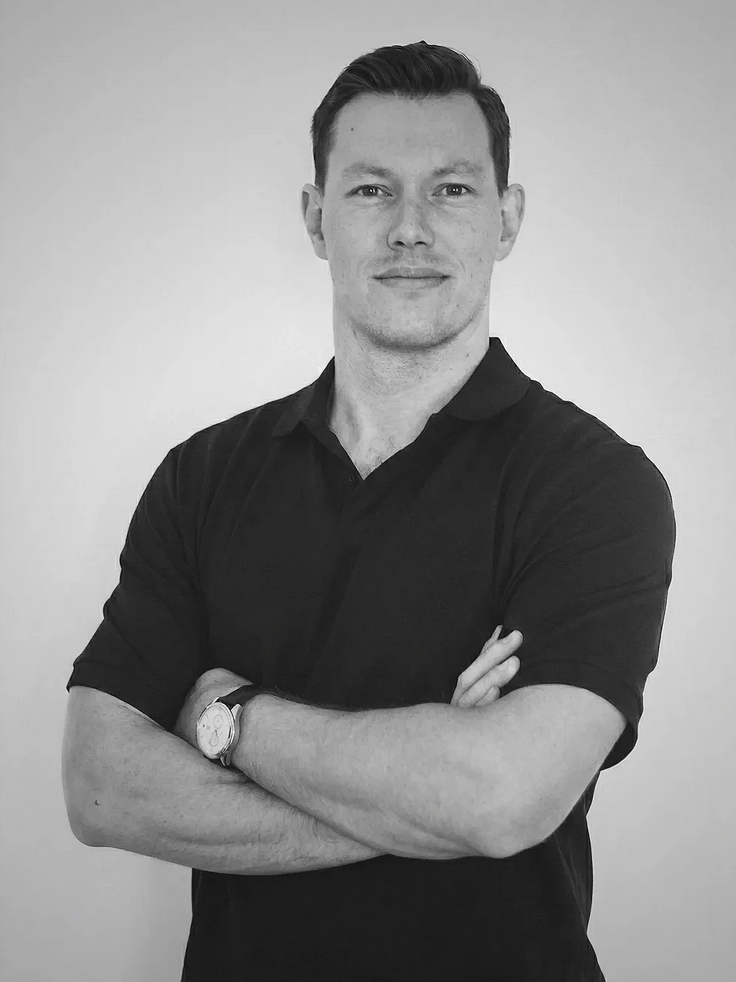
Donovan Baker
Physiotherapist
Donovan Baker leads The Physio Don with over 15 years' experience across private practice, aged care, and high-performance sport. His background in Exercise Science and APA Gerontology means he brings a strength-first, whole-person approach to knee rehab — from early post-op recovery to getting back under a barbell.
View full profile
Nathan McKeough
Physiotherapist
Nathan McKeough is a Hervey Bay physiotherapist with Honours training and APA specialisations in Sports Physiotherapy and Dry Needling. He has a strong focus on sports injury rehabilitation and load management, helping runners, lifters, and everyday locals rebuild confident, capable knees.
View full profileReady to do something about your knee?
Book online or give us a call — we'll work out what's going on and what the next step looks like.
Back to In-Clinic Physiotherapy.